Introduction
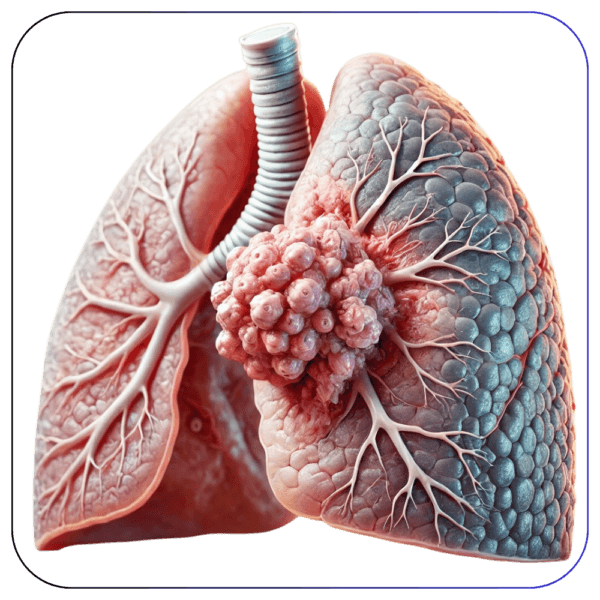
Lung cancer is often more treatable when caught early, before symptoms become severe. Screening is the process of looking for cancer in people who are at high risk but don't have any symptoms yet. Early detection focuses on identifying small nodules that can be surgically removed or treated effectively.
Symptoms (When They Appear)
- Persistent cough that changes over time
- Coughing up blood (even small amounts)
- Unexplained weight loss
- Bone pain or headache
- Persistent chest pain or shortness of breath
Causes & Risk Factors
- Heavy history of smoking (current or former smokers)
- Exposure to secondhand smoke
- Radon gas exposure
- Occupational exposure to asbestos, arsenic, or chromium
- Personal or family history of lung cancer
Our Treatment Approach at GHCCD
GHCCD prioritizes early detection through our Lung Nodule Clinic. We utilize Low-Dose Computed Tomography (LDCT), the gold standard for screening high-risk individuals. If a suspicious nodule is found, our interventional pulmonology team performs advanced diagnostics like Video Fiber Optic Bronchoscopy or CT-guided Biopsy to confirm the diagnosis.
We work closely with the oncology departments to ensure a seamless transition for patients requiring surgery, chemotherapy, or radiation. By providing these advanced screenings for free, we remove the financial barrier to early life-saving diagnosis.
When to Visit GHCCD
If you are over age 50 and have a long history of smoking, you should consult our faculty for a screening evaluation, even if you feel perfectly healthy.
FAQ
Q: Who should get screened for lung cancer at GHCCD? A: We recommend screening for individuals aged 50-80 who have a significant smoking history (e.g., 20 pack-years) or those with significant occupational exposure.